|
|
|
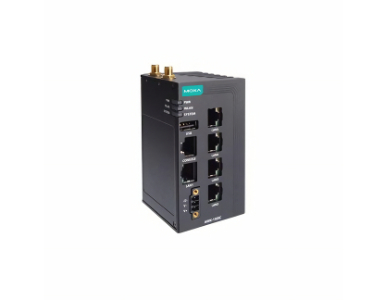
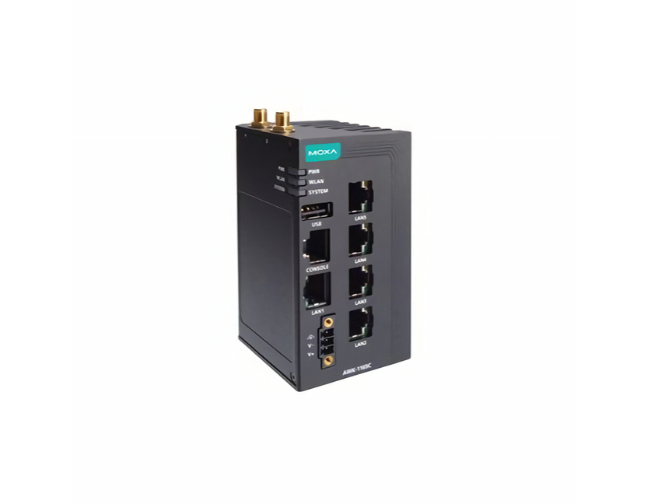
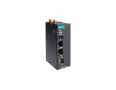
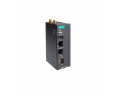
Moxa AWK-1165C-UN - Industrial 802.11ax wireless client with 5 10/100/1000BaseT(X) ports, IP30, UN band, -25 to 60C
by MOXA
|
|
|
|
AWK-1165C-UN_SUMMARY.html
-
High-speed IEEE 802.11ax Wi-Fi
-
Selectable dual-band Wi-Fi with data rates up to 1,201 Mbps
-
Latest WPA3 encryption for enhanced wireless network security
-
Universal(UN)models with configurable country or region code for more flexible deployment
-
Easy network setup with Network Address Translation(NAT)
-
Millisecond-level Client-based Turbo Roaming
-
The Turbo Roaming recovery time indicated herein is an average of test results documented,in optimized conditions,across APs configured with interference-free 20-MHz RF channels,WPA2-PSK security,and default Turbo Roaming parameters. The clients are configured with 3-channel roaming at 100 Kbps traffic load.Other conditions may also impact roaming performance.For more information about Turbo Roaming parameter settings,refer to the product manual.
-
Built-in 2.4 GHz and 5 GHz band pass filter for more reliable wireless connections
-
-40 to 75C wide operating temperature range(-T models)
-
Integrated antenna isolation
|
|
|
AWK-1165C-UN_DESCRIPTION.html
AWK-1165C-UN - The AWK-1165C Series industrial wireless client is designed to meet the growing need for efficient data transmissions in high-density deployments scenarios through IEEE 802.11ax(Wi-Fi 6)technology. The AWK-1165C is compliant with industrial standards and approvals covering operating temperature, power input voltage, surge, ESD, and vibration. The compact form factor with DIN-rail or optional wall mounting easily fits into industrial machines or control cabinets, offering reliable wireless connectivity. The AWK-1165C can operate on the 2.4 or 5 GHz band and is backwards compatible with existing 802.11a/b/g/n/ac deployments to future-proof your wireless investments.
AWK-1165C-UN.html
| WLAN Interface |
| WLAN Standards |
- 2.4 GHz: 802.11ax with 1024 QAM support, 20/40 MHz
5 GHz: 802.11ax with 1024 QAM support,
20/40/80 MHz
|
| Frequency Band for UN (20 MHz operating channels) |
- 2.412 to 2.472 GHz (13 channels)
5.180 to 5.240 GHz (4 channels)
5.745 to 5.825 GHz (5
channels)
Available channels change depending on the selected country or region code.
5.500 to 5.700 GHz (11 channels) DFS (Dynamic Frequency
Selection) channel support: In AP mode, when a radar signal is detected, the device will
automatically switch to another channel. However, according to regulations, after
switching channels, a 60-second availability check period is required before starting
the service.
5.260 to 5.320 GHz (4 channels) DFS (Dynamic Frequency Selection) channel support: In AP
mode, when a radar signal is detected, the device will automatically switch to another
channel. However, according to regulations, after switching channels, a 60-second
availability check period is required before starting the service.
|
| Wireless Security |
- WEP encryption (64-bit and 128-bit)
WPA/WPA2/WPA3-Enterprise (IEEE 802.1X/RADIUS, TKIP,
AES)
WPA/WPA2/WPA3-Personal
|
| Transmission Rate |
- 2.4 GHz:
Up to 573.5 Mbps
5 GHz:
Up to 1,201 Mbps
|
| Transmitter Power for 802.11a (Dual Chain) |
- 18±1.5 dBm @ 6 Mbps
18±1.5 dBm @ 54 Mbps
|
| Transmitter Power for 802.11n (5 GHz, Dual Chain) |
- 18±1.5 dBm @ MCS0 20 MHz
18±1.5 dBm @ MCS7 20 MHz
18±1.5 dBm @ MCS0 40 MHz
18±1.5
dBm @ MCS7 40 MHz
|
| Transmitter Power for 802.11ac (Dual Chain) |
- 18±1.5 dBm @ MCS0 20 MHz
18±1.5 dBm @ MCS8 20 MHz
18±1.5 dBm @ MCS0 40 MHz
18±1.5
dBm @ MCS9 40 MHz
18±1.5 dBm @ MCS0 80 MHz
18±1.5 dBm @ MCS9 80 MHz
|
| Transmitter Power for 802.11ax (Dual Chain) |
- 18±1.5 dBm @ MCS0 20 MHz
17±1.5 dBm @ MCS11 20 MHz
18±1.5 dBm @ MCS0 40 MHz
17±1,5
dBm @ MCS11 40 MHz
18±1.5 dBm @ MCS0 80 MHz
17±1.5 dBm @ MCS11 80 MHz
|
| Transmitter Power for 802.11b (Dual Chain) |
- 18±1.5 dBm @ 1 Mbps
18±1.5 dBm @ 11 Mbps
|
| Transmitter Power for 802.11g (Dual Chain) |
- 18±1.5 dBm @ 6 Mbps
18±1.5 dBm @ 54 Mbps
|
| Transmitter Power for 802.11n (2.4 GHz, Dual Chain) |
- 18±1.5 dBm @ MCS0 20 MHz
18±1.5 dBm @ MCS7 20 MHz
18±1.5 dBm @ MCS0 40 MHz
18±1.5
dBm @ MCS7 40 MHz
|
| Transmitter Power for 802.11ac (2.4 GHz, Dual Chain) |
- 18±1.5 dBm @ MCS0 20 MHz
18±1.5 dBm @ MCS8 20 MHz
18±1.5 dBm @ MCS0 40 MHz
18±1.5
dBm @ MCS7 40 MHz
|
| Transmitter Power for 802.11ax (2.4 GHz, Dual Chain) |
- 18±1.5 dBm @ MCS0 20 MHz
18±1.5 dBm @ MCS11 20 MHz
18±1.5 dBm @ MCS0 40 MHz
18±1.5
dBm @ MCS11 40 MHz
|
| Receiver Sensitivity for 802.11a (measured at 5.680 GHz) |
- Typ. -88 @ 6 Mbps
Typ. -72 @ 54 Mbps
|
| Receiver Sensitivity for 802.11n (5 GHz; measured at 5.680 GHz) |
- Typ. -88 dBm @ MCS0 20 MHz
Typ. -68 dBm @ MCS7 20 MHz
Typ. -84 dBm @ MCS0 40 MHz
Typ. -66 dBm @ MCS7 40 MHz
|
| Receiver Sensitivity for 802.11ac (5 GHz) |
- Typ. -88 dBm @ MCS0 20 MHz
Typ. -65 dBm @ MCS8 20 MHz
Typ. -85 dBm @ MCS0 40 MHz
Typ. -60 dBm @ MCS9 40 MHz
Typ. -81 dBm @ MCS0 80 MHz
Typ. -55 dBm @ MCS9 80 MHz
|
| Receiver Sensitivity for 802.11ax (5 GHz) |
- Typ. -88 dBm @ MCS0 20 MHz
Typ. -59 dBm @ MCS11 20 MHz
Typ. -85 dBm @ MCS0 40 MHz
Typ. -56 dBm @ MCS11 40 MHz
Typ. -81 dBm @ MCS0 80 MHz
Typ. -52 dBm @ MCS11 80 MHz
|
| Receiver Sensitivity for 802.11b (measured at 2.437 GHz) |
- Typ. -96 dBm @ 1 Mbps
Typ. -88 dBm @ 11 Mbps
|
| Receiver Sensitivity for 802.11g (measured at 2.437 GHz) |
- Typ. -90 dBm @ 6 Mbps
Typ. -74 dBm @ 54 Mbps
|
| Receiver Sensitivity for 802.11n (2.4 GHz; measured at 2.437 GHz) |
- Typ. -90 dBm @ MCS0 20 MHz
Typ. -70 dBm @ MCS7 20 MHz
Typ. -87 dBm @ MCS0 40 MHz
Typ. -69 dBm @ MCS7 40 MHz
|
| Receiver Sensitivity for 802.11ac (2.4 GHz) |
- Typ. -90 dBm @ MCS0 20 MHz
Typ. -66 dBm @ MCS6 20 MHz
Typ. -87 dBm @ MCS0 40 MHz
Typ. -63 dBm @ MCS9 40 MHz
|
| Receiver Sensitivity for 802.11ax (2.4 GHz) |
- Typ. -90 dBm @ MCS0 20 MHz
Typ. -59 dBm @ MCS11 20 MHz
Typ. -87 dBm @ MCS0 40 MHz
Typ. -56 dBm @ MCS11 40 MHz
|
| WLAN Operation Mode |
- Client
Client-Router
Slave
Sniffer
|
| Antenna |
- External, 2/2 dBi
Omni-directional
|
| Antenna Connectors |
|
| Ethernet Interface |
| Standards |
- IEEE 802.3 for 10BaseT
IEEE 802.3u for 100BaseT(X)
IEEE 802.3ab for 1000BaseT(X)
IEEE 802.3az for Energy-Efficient Ethernet
IEEE 802.1Q for VLAN Tagging
IEEE 802.1X for
authentication
|
| 10/100/1000BaseT(X) Ports (RJ45 connector) |
|
| Ethernet Software Features |
| Management |
- DHCP Server
DHCP Client
DNS
HTTP
IPv4
LLDP
SMTP
SNMPv1/v2c/v3
Syslog
TCP/IP
Telnet
UDP
VLAN
MXconfig
|
| Routing |
- Port forwarding
Static Route
NAT
|
| Security |
- HTTPS/SSL
RADIUS
SSH
Certificate Management
|
| Time Management |
|
| Environmental Limits |
| Operating Temperature |
|
| Storage Temperature (package included) |
|
| Ambient Relative Humidity |
- 5 to 95% (non-condensing)
|
| Standards and Certifications |
| EMC |
- EN 61000-6-2/-6-4
EN 55032/35
|
| EMI |
- CISPR 32, FCC Part 15B Class A
|
| EMS |
- IEC 61000-4-2 ESD: Contact: 8 kV; Air: 15 kV
IEC 61000-4-3 RS: 80 MHz to 1 GHz: 10 V/m
IEC 61000-4-4 EFT: Power: 2 kV; Signal: 1 kV
IEC 61000-4-5 Surge: Power: 2 kV; Signal: 1
kV
IEC 61000-4-6 CS: 10 V/m
IEC 61000-4-8 PFMF: 30 A/m
|
| Road Vehicles |
|
| Safety |
|
| Vibration |
|
| Radio |
- EN 300 328, EN 301 489-1/17, EN 301 893, ANATEL, FCC, MIC, NCC, RCM, SRRC, WPC, KC, NBTC, IC
|
|
|
|
|